Talk & Connect: Easy Parent–Child Communication Habits

Talk & Connect: Simple Ways to Strengthen Parent–Child Communication
Warm, consistent conversation is one of the most practical tools for building trust, cooperation, and emotional safety at home. This guide shares easy, repeatable ways to listen better, ask questions that invite real answers, and turn everyday moments into connection—using a structured workbook approach that keeps things simple even on busy days.
What changes when communication feels safe
When kids feel emotionally safe, they don’t just “talk more”—they talk sooner, with less defensiveness, and with more clarity. That shift changes the whole tone of family life.
- More honesty: kids share sooner, before problems grow
- Less power struggle: clearer expectations and fewer misunderstandings
- Better emotional vocabulary: children get practice naming feelings without shame
- Stronger repair after conflict: quicker apologies, calmer reconnection
- More cooperation: children are more willing to try when they feel understood
Guidance from organizations like HealthyChildren.org (American Academy of Pediatrics) consistently emphasizes that connection and consistency help kids regulate emotions and handle stress more effectively.
Common patterns that quietly block connection
Most “communication problems” aren’t about caring less—they’re about default habits kicking in when everyone is tired.
- Fix-it mode: jumping to solutions before feelings are heard
- Rapid-fire questions: “How was school?” becomes a dead-end routine
- Accidental interrogation: why-questions that feel like blame (“Why did you do that?”)
- Minimizing: “You’re fine” or “It’s not a big deal” when it feels big to them
- Distraction overlap: conversations competing with screens, chores, or rushing out the door
A useful reset is to trade speed for steadiness: fewer questions, more reflection, and shorter talks that happen more often.
A practical workbook rhythm that fits real life
Consistency beats intensity. A simple rhythm—repeated often—teaches kids what to expect: attention, curiosity, and calm follow-through.
- Keep it short: 5–10 minutes is enough to build momentum
- Repeat a predictable flow: check-in → reflect → one small next step
- Use prompts instead of lectures: children open up when they feel choice and curiosity
- Track patterns: note what times of day and topics lead to the best connection
- End with warmth: a simple “Thanks for telling me” builds safety for next time
A simple weekly plan for better conversations
| Day | Focus | Starter prompt | Parent skill to practice |
|---|---|---|---|
| Mon | Feelings check-in | “What was the strongest feeling today?” | Reflect before responding |
| Tue | Friendships | “Who did you feel most comfortable with today?” | Curiosity without prying |
| Wed | School and effort | “What felt tricky, and what helped?” | Praise process, not labels |
| Thu | Family teamwork | “What would make mornings easier for you?” | Collaborative problem-solving |
| Fri | Wins and gratitude | “What’s one thing you’re proud of this week?” | Celebrate small wins |
| Sat | Values and choices | “What felt fair or unfair this week?” | Name boundaries calmly |
| Sun | Repair and reset | “Is there anything we should redo together?” | Apology and repair |
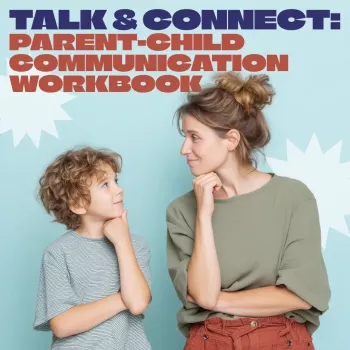
If you want a ready-to-use structure with prompts you can rotate through, Talk & Connect: Parent-Child Communication Workbook keeps the flow simple: check in, reflect, and finish with one doable next step.
Conversation starters that get more than one-word answers
Kids often shut down when questions feel like a test. The goal is to invite a story, not extract a report.
- Use “what” and “how” instead of “why” to reduce defensiveness
- Offer gentle options: “Was it more frustrating or more boring?”
- Ask about moments, not summaries: “Tell me about a moment you remember from today.”
- Invite perspective-taking: “What do you think they needed in that moment?”
- Try a low-pressure entry: “Want to talk, want a hug, or want a distraction first?”
For younger kids, try “two-choice” prompts. For older kids and teens, try a single question and give extra quiet time—silence often means they’re deciding if it’s safe to answer.
Listening tools that help kids feel understood
Listening isn’t passive; it’s a set of small skills that help a child feel felt. The more understood they feel, the easier it is for them to accept limits and feedback.
These tools pair well with evidence-based parenting guidance like the CDC’s Essentials for Parenting, which emphasizes staying calm, being consistent, and reinforcing positive behaviors.
Handling tough topics without shutdowns
Using Talk & Connect as a family routine
To make routines easier to stick with during busy seasons (school events, travel, schedule changes), some families like pairing communication habits with simple planning tools. A lightweight option is the Minimalist Travel Packing Planner, which helps reduce last-minute stress that can spill over into family interactions.
And because family calm often improves when adults feel prepared, the Must-Know Pet First-Aid Cheat Sheet can be a helpful household printable—one less “unknown” competing for attention when kids need it most.
When extra support can help
Resources like the APA’s parenting resources can also help families understand stress, behavior, and healthy emotional development.
FAQ
What age is a parent–child communication workbook best for?
Most families can adapt prompts for ages 4 through the teen years by adjusting length and choices: younger kids do well with short, playful options, while older kids prefer autonomy-respecting questions. Consistency matters more than long conversations.
What if a child refuses to talk?
Keep it low-pressure: try “parallel talk” during walks, drives, or activities, offer choices (“talk, hug, or quiet?”), and reflect what you notice without pushing. If they won’t engage, circle back later and prioritize safety and small connection moments.
How often should family check-ins happen to see improvement?
A realistic goal is 3–5 short check-ins per week. Improvements often show up first in tone and openness, so track small wins and repairs rather than expecting instant deep conversations.











Leave a comment