Pack Light Every Time: Minimalist Travel Packing Planner
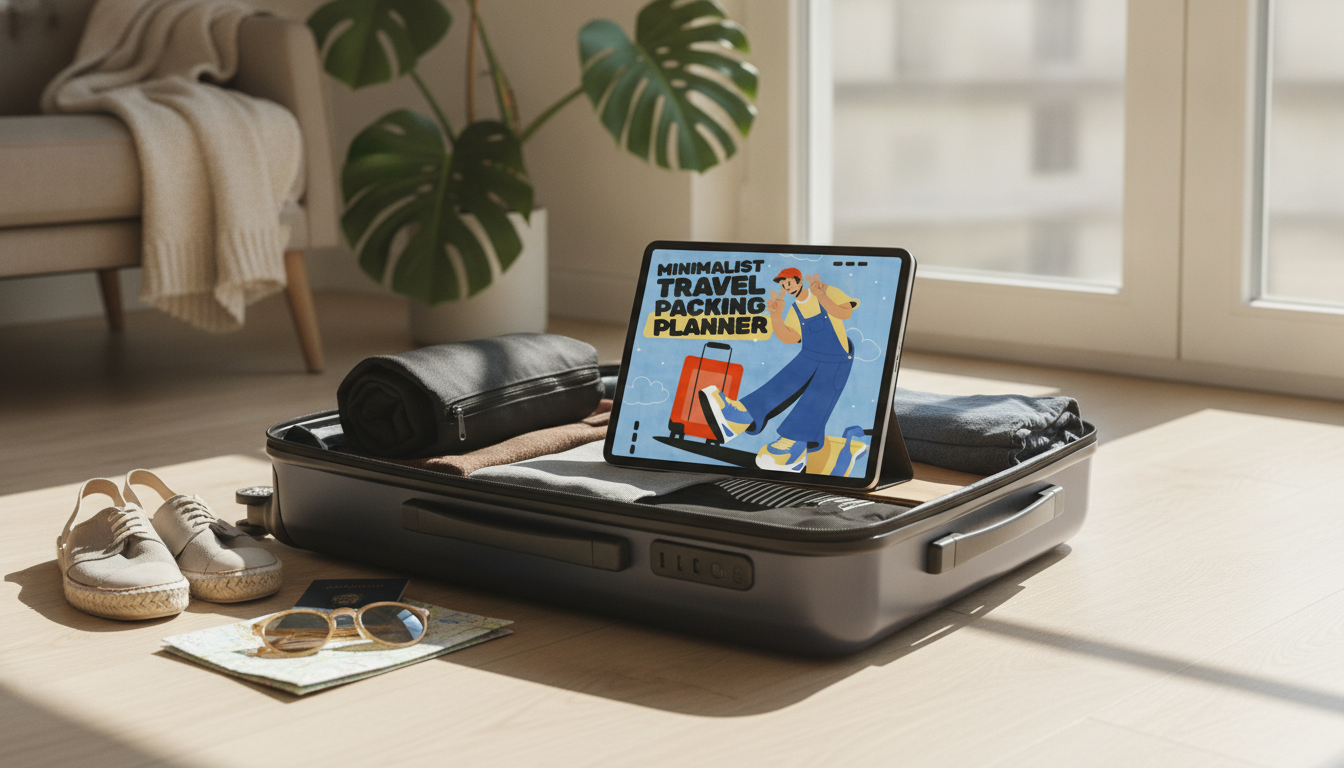
Minimalist Travel Packing Planner: Pack Light, Stay Organized, Travel Calm
Packing light gets easier when decisions are made once and reused for every trip. A minimalist packing planner turns a vague “what if I need it?” pile into a clear, repeatable system—so essentials are covered, outfits work together, and the bag closes without stress. The goal isn’t deprivation; it’s mobility, comfort, and confidence that you have what you need (and only what you’ll actually use).
What “minimalist packing” actually means
Minimalist packing is less about owning fewer things and more about choosing a smaller set of travel items that work harder. When every piece has a role—and plays well with the rest—your luggage gets lighter without feeling restrictive.
- Prioritize versatile items that work across multiple outfits and situations (day-to-night, casual-to-smart casual, indoor-to-outdoor).
- Pack for activities and weather patterns, not for every possible scenario. A forecast and an itinerary beat “just in case” thinking.
- Use a small set of rules: a one-bag limit, capsule colors, and a fixed toiletry kit that stays ready.
- Aim for fewer decisions on travel day by using a reusable checklist—so the process stays calm even when life is busy.
A simple packing workflow that stays the same for every trip
A minimalist workflow keeps packing predictable. Instead of starting from scratch each time, you run the same steps, adjusting only for climate, dress code, and trip length.
- Step 1: Define trip inputs (duration, climate range, dress level, laundry access).
- Step 2: Pick a capsule palette (2–3 main colors + 1 accent) to increase outfit combinations.
- Step 3: Build outfits first, then add layers and only then add extras.
- Step 4: Lock in “forever kits” (toiletries, tech, documents) that live packed.
- Step 5: Do a final edit using a “remove 3” rule (delete three non-essentials before zipping).
Minimalist packing workflow at a glance
| Stage | Goal | Quick check |
|---|---|---|
| Trip inputs | Pack for reality, not anxiety | Do weather + activities match every item? |
| Capsule palette | More outfits with fewer pieces | Can every top match every bottom? |
| Outfits first | Avoid random single-use items | Does each item earn 2+ wears? |
| Forever kits | Reduce last-minute scrambling | Is the kit complete and travel-size compliant? |
| Final edit | Keep bag light and mobile | Can 3 items be removed without impact? |
Core packing categories (and what to keep minimal)
Minimalist packing works best when you limit “category creep.” Choose a cap for each category and stick to it—especially for clothing, shoes, and toiletries.
Clothing
Focus on layering: a base layer, a mid layer, and an outer layer. This approach handles shifting temperatures without bulky single-purpose items. If a piece doesn’t coordinate with at least two other items, it’s a candidate for removal.
Shoes
Limit to a primary pair that can handle your longest walking day. Add a compact second pair only if the trip truly demands it (e.g., a packable sandal for beach showers or a lightweight flat for a formal dinner).
Toiletries
Decant and standardize. A single, always-ready toiletry kit prevents last-minute overpacking. For carry-ons, follow the latest TSA liquid guidelines to avoid airport stress: TSA: Liquids Rule.
Tech
Use one charging strategy: a multi-port charger plus short, durable cables. Skip “backup” versions of the same item unless you have a specific risk (remote work deadlines, medical devices, or limited power access).
Documents & money
Use one secure travel wallet system and store digital copies in a safe, accessible location. For international trips, it also helps to run through a formal pre-departure checklist: U.S. Department of State: International Travel Checklist.
How a digital packing planner helps reduce overpacking
Overpacking usually isn’t a “more discipline” problem—it’s a decision fatigue problem. A digital planner reduces the number of choices you have to make and gives you a place to improve your list over time.
- Reusable templates mean your baseline list is already done.
- Easy trip-type adjustments (city break, beach, business, outdoors) without rebuilding the entire plan.
- Intentional outfit planning so pieces get reworn and remixed.
- A pre-trip timeline (laundry, charging, document checks) to prevent last-minute add-ons.
- Notes on what worked so you stop bringing items that consistently come home unused.
For health essentials and destination-specific needs, the CDC offers a practical overview worth scanning before you finalize your list: CDC Travelers’ Health: Pack Smart.
Minimalist Travel Packing Planner (digital guide): what it’s designed for
If you want a packing system you can reuse, a dedicated planner keeps everything in one place—lists, outfit plans, and reminders—so each new trip takes less effort than the last.
- A structured system for light, smart packing without forgetting essentials
- Trip-by-trip planning pages plus a repeatable master checklist
- Organization that supports one-bag travel, weekend trips, and longer itineraries with laundry
- A calmer packing experience through clear categories and decision prompts
- Instant access on phone/tablet or printable pages for a paper-friendly setup
Minimalist Travel Packing Planner | Digital Packing Guide for Light, Smart & Stress-Free Trips
Packing rules that keep bags light (without feeling deprived)
Common minimalist packing mistakes (and quick fixes)
Helpful add-ons for calmer trips (optional)
- Talk & Connect: Parent-Child Communication Workbook – Positive Parenting Guide for Stronger Family Bonds, Conversation Starters, and Emotional Connection
- Must-Know Pet First-Aid Cheat Sheet | Emergency Printable Guide for Pet Owners | Vet Tips
FAQ
What is a good minimalist packing list?
A good minimalist list is built around versatile layers, a capsule color palette, and a small number of repeatable essentials: 2–4 tops, 1–2 bottoms, 1 layering piece, 1 outer layer, sleepwear, underwear/socks for a few days (with a laundry plan), one main pair of shoes, compact toiletries, chargers, and documents—adjusted for climate and activities.








Leave a comment